The first time I saw her was in the spring when she tried to sell me a white tulip in front of the theater.
“It will bring you love,” she said. The grime under her fingernails matched the brown edges of the tulip’s petals.
“You dare to suggest I have no family to love?” My children, my husband—they all filled my heart.
She laughed as if I had told a joke and pulled the thin remains of a shawl over her boney shoulders. “Well, then,” she said through crooked teeth, “perhaps we have different definitions of love, for you walk alone with a shadow on your face.”
I put my hand to my mouth, and she quickly dropped her gaze. Does she see the guilt I carry? A man at her side pulled back her hand holding the tulip. I heard him scold her as I walked away.
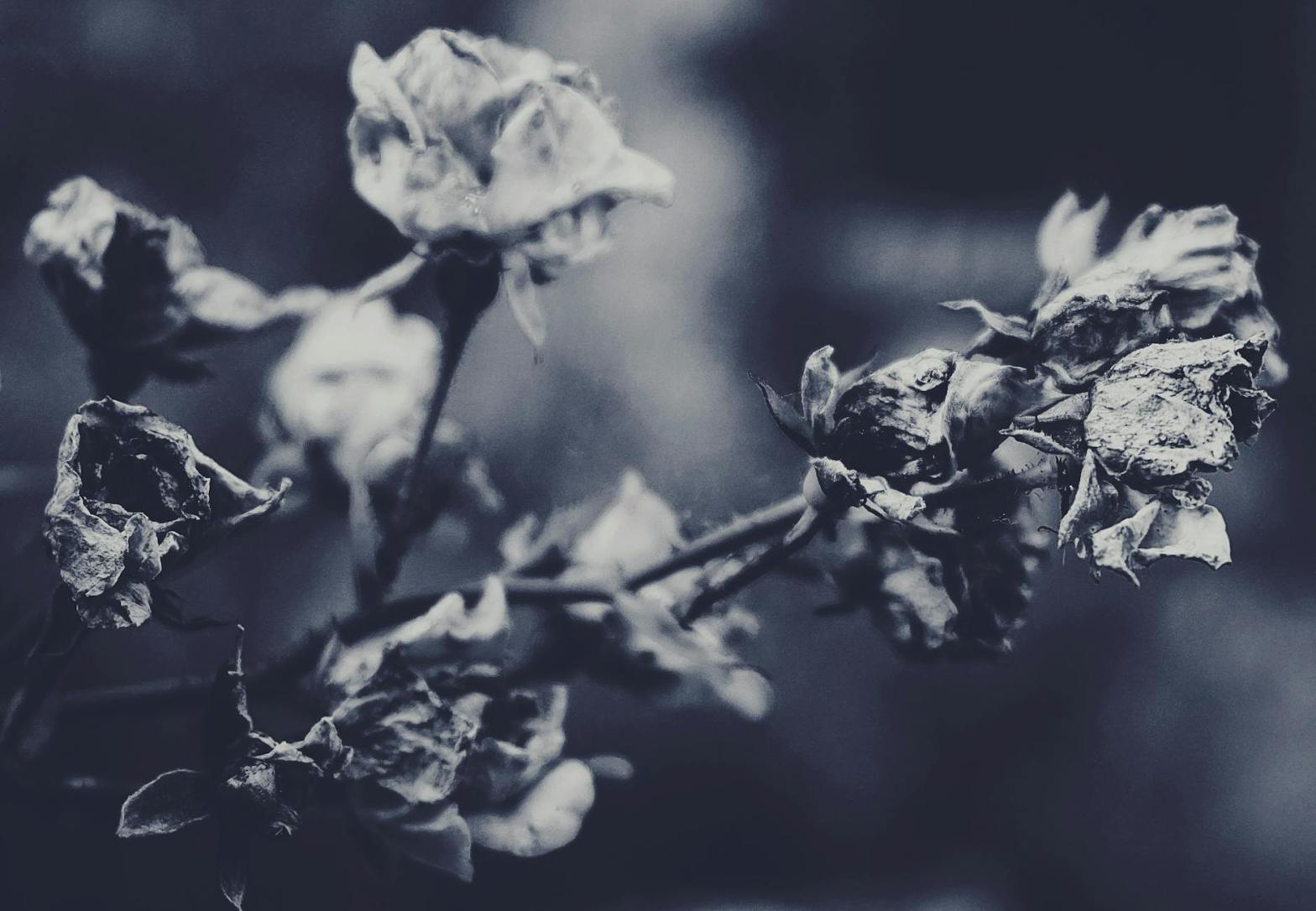
The second time I saw her was in summer when she tried to sell me a bouquet of daisies in the square. Their heads drooped as if they knew their own shame.
“For your children, my dear?” she asked. Her smile was cautious, her thin lips hiding her crooked teeth. “To bring delight to their faces.”
“We have a garden,” I said. “My children don’t need dead daisies.” They had blooming larkspur, wild bergamot, and pungent tansies. Our garden was where my daughter searched for snails under rocks and my son teased the blackbirds by getting too close to their nests. How foolish was this woman to think my children were in need of other delights.
The woman looked at the daisies. “Perhaps you are right,” she said. “Your children themselves must be delightful with their simple sincerity. Why give them what they already have?” She pulled a single flower from the bouquet. Wrinkled petals fell to the ground. “For you, then?” She grinned. “No charge.”
“You don’t think me sincere?” Anger fluttered in my chest, its wings like those of the mother blackbirds being pestered by my son. She must see right into my fickle heart that aches for these sweet escapes to the city, away from the people who love and need me.
Her grin drooped.
I turned away and didn’t look back when I heard her say something about misunderstandings.
The third time I saw her was in fall when the city celebrated the abundance of the season. The children were tucked safely at home, and my husband and I were young again, like newly acquainted loves. Spirited notes filled our ears, and spirited drinks filled our cups.
I was in the midst of friends until the fog rolled in from the sea. It was the kind so thick it challenged our senses and tangled our good intentions.
Someone yelled my name. One wrong turn led to another, and then I stood alone in a still, dim alley. Three bulking shadows sauntered around the corner. They smelled of booze and smokey parlors. They smelled of bad luck.
“Aren’t you a pretty thing?” the tallest of them said. He threw down his bottle, but it was his mouth that was made of sharp shards of desire.
He grabbed my wrist. My scream was quick and sharp—a feral knife that shocked my own ears and cut through the heavy air.
My pulse thumped under his fingers as he tightened his grip. Each of his fingernails, so clean and untarnished, was a crescent moon pressed tightly against his nailbeds. They were the fingers of one who had never lifted rocks for a child to search for snails.
He has never seen love. The truth coursed through me in the time it took me to yank my arm from his grasp. But I have.
I screamed that feral scream again and ran through the mist that cloaked friend from foe. Pounding footsteps followed behind me.
A doorway cracked open, and golden light spilled across the ground.
“My dear!” A shrouded woman with dirty fingers held out a red rose. “For hope,” she said.
I stretched out my hand to hers and grabbed hold. “No,” I said. “For kindness.”
The fourth but not the last time I saw her, it was winter. At the market, she sold my husband and me holly for our table and gave my children a wreath of evergreen for our door.
 Leah Boyer